What's your weird little process?

Estimated read time: 2 minutes.

One process option; Freaking out

One process option; Freaking out

I was talking with a client this morning, and she told me she was feeling indifferent about some work she needed to do. Then she proceeded to judge her indifference and talk about how bad it makes her feel. Do you do some version of this to yourself?

Years ago, I was sitting in a circle in a leadership program, and one of my close friends was sharing how frustrated she was with her own apathy. She was feeling sad and useless. Then our mentor landed a golden nugget on us. He said, "What if apathy is part of your process?"

Whoa! Life changing moment! I want to share it with you!

You have a process. You've probably been following it for years. And when you are in the "not so productive" part of your process, you probably judge yourself and give yourself a hard time for being "not productive." The guilt and judgment sap your energy which is not useful. Make sense?

Here's the thing, assuming you eventually get your project / homework / phone calls / meetings done, your weird little process is working for you. Imagine that? It's working! Who knew?

Another example. My process is that I make a stop in FREAK OUT (and I clean). I spend 1-3 days in self-doubt and questioning and general panic when I'm stepping into something new. Then I pull myself up and get to work with a clarity and determination that the magic pixies generated in the FREAK OUT.

The FREAK OUT is the springboard to productivity. I used to pile on judgment, fear and guilt about not getting anything done. That was oh, so helpful. And now, I'm all, like, "check it out. Here I am in my weird little process. Even though I hate this, I'll pop out in a day or two and get to work." Weirdly, it works. Every time. Even when I fear that this time it won't.

So, what's the place you stop on your way to productivity and courage? Apathy? Indifference? Fear? Doubt? Resistance? Anger? Resentment? Avoidance? Get to know that weird little stop on the track to action, creativity, and production. Then you can drop the judgment, ride it out, and get to work with even more energy.

I hope this helps.

Christina

P.S. If you know someone who would like to receive this newsletter, they can sign-up for The Corporate Rebel Video Podcast and Newsletter HERE.

You want to make more money. Consider this.

2 little 'ole minutes to read

unnamed (9).jpg

New clients frequently tell me that they want to make more money and get promoted. They say that more money is going to make them feel valued and appreciated and happier at work. Does this ring true for you or someone you know?

Money is great. It gives you access and enables you to do things you care about like give it away, support important causes, buy food, and trade it for precious time.

And, money is only one currency. Cultural messages teach you that money is the ONLY currency. Prevailing messages want you to believe that money (or title) is the measure of your self-worth as an employee and a human being.

And guess what? (This is the part of writing these newsletters that I love.) There are many forms of currency by which to measure your worth, work, and life experience. (Although one could argue that your worth is never measurable. It just is. Full stop. End of newsletter.)

Please indulge me with a story.

My family closed on a new house yesterday (Yikes!) which means we had to sell our house (double, triple Yikes!). We set our sale price and strategized with our realtor. We were walking out the back door to the airport for vacation as our first buyers were walking in the front. Our house sold in 2 days with 5 offers (whew and wow and head still spinning).

When we returned after a week away, numerous friends said to us that we could have charged more for our house. In my vulnerable, post-vacation state, I started down the path of a freakout. Did we sell out? Could we have gotten more? Money, money, money!

Then I was reminded (thank you Steve and our amazing realtor, Brad). We consciously chose currency other than money for the sale of our house. We wanted potential buyers to feel excited (they did). We wanted great new neighbors for our beloved neighbors (yes!). We wanted buyers who would love our house and care for the garden like we do (they will). We wanted the entire process to be easy with as little stress and disruption to our family as possible (we were literally taking offers in our flip-flops on the beach and never had to do the "clean and run" I have heard is so stressful - can't get easier than that).

Our currency in this sale is great relationships, ease, little to no stress, and a great couple we are delighted to welcome home. For what amount of money would we trade all that? No amount.

When you look around your work and life, what's the currency you use to measure your success and value? (Here are some hints to work with: love, creativity, relationships, contribution, work/life balance, feeling deeply fulfilled, joy, ease).

Let's work together to change the measuring stick. As MasterCard used to say, your ease, joy, and happiness are priceless!

I hope this helps.

Christina

What to do when you feel overwhelmed

Estimated read time - an easy 2 minutes

unnamed (8).jpg

Spring break season is over. If you went away, you may be like me, overwhelmed with laundry and groceries and unpacking and work and getting back into your schedule and OMG!

If you stayed home, you may be mourning your free time and routine-less existence.

If you didn't get a break, you may be overloaded with work and activities and counting the days until your next vacation.

Do any of these sound familiar?

Overwhelm happens to all of us sometimes. And sometimes, overwhelm is a tricky little bugaboo that distracts you from actually doing THE THINGS.

A client emailed me yesterday about her overwhelm, and after I dashed off this response, I realized, this is great information for you (and me). Here you go.

Your “how to function” when you're overwhelmed plan. In order.

  1. Breathe.
  2. Breathe again.
  3. Make a list of all the things.
  4. Breathe.
  5. Figure out which ones someone else can do or you can outsource or delegate or skip or negotiate or push out. (Can someone else pick up your child - like a neighbor or friend? Are there things on the list you can skip or move to next week? Where can you ask for help?)
  6. It’s rare that we have to do all the things ourselves, right now.

    You can back out of things or skip them to honor your sanity and time with your family or yourself. You can. Really and truly. I've tried it. It works.

  7. Then break down all the things and decide which comes first, which second, etc.
  8. Breathe. Then keep breathing.
  9. Focus on one thing at a time. Overwhelm sets in when you look at the huge long list and the entire packed future. Allow yourself to do one thing at a time (make phone call, insert data into report, answer email for 15 minutes). Do one thing at a time. Sometimes I even talk to myself out loud, ("Ok, Christina. Make that phone call now") to keep myself from moving too fast into the future.
  10. Breathe.
  11. For the future, take a look at what you say yes to and where you might want to say no more often (volunteering) so you can put your focus where it is most important (family, work projects, exercise).

Move forward, one step at a time. Oh, and remember to breathe!

I hope this helps.

Christina

Greetings from Costa Rica!

Estimated read time: 1.5 minutes

My daughter took this photo of her brother.

My daughter took this photo of her brother.

I'm in Costa Rica with my family this week. I was all prepared to write you a newsletter about rest and rejuvenation because, goodness knows this family needed both.

And then today I took surfing lessons, and I am bone tired.

All those groovy surfers who make riding the waves look easy are 1. amazing and 2. faking it.

Surfing is not easy.

In the interest of full disclosure, I am also afraid of waves. I love the ocean and the beach, and big waves make my heart pound and my stomach hurt. I agreed to surfing lessons when the waves were little ripples. Then, as the ocean wants to do, it changed. When we strode down the sand, surfboards under our arms, the instructor was using words like "wind" and "dangerous."

I was tumbled around like a Maytag washing machine. Waves crashed into my head. Our instructor said, "duck!" more than once. It takes energy to keep a surf board pointing straight in a moving ocean. Standing up was a lot easier on land, and I fell off the board more times than I can count.

I learned a few things and in my exhausted haze, I see metaphors for you. If you find them, please reply and tell me what they are.

  1. Trying to surf was fun.
  2. Trying to surf was humbling.
  3. Surfing is now on my list of life experiences (and on the list of life experiences I don't have to repeat).
  4. I survived every single wave, even when I was scared.
  5. Right when I was about to quit, I got one great ride to the beach. I pumped my arm and yelled, "take THAT!" then got back on the board and went out for more.
  6. My favorite lesson came from our instructor, Peto, who said to me as we were leaving the water: "Take it slow. You have to wait for the right moment."

Yes, Peto, that is an important lesson both in, and out, of the water.

As the Ticos say, "Pura Vida!"

Christina

P.S. My mother-in-law convinced me to go zip lining tomorrow. This family is trying to kill me. I need some rest!

Accepting accolades. It's hard. Here's how.

Estimated read time: 2 minutes.

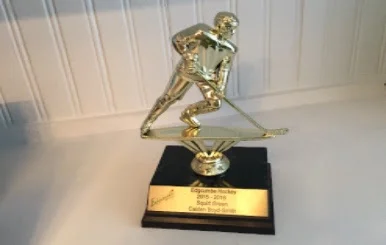
An award proudly displayed in our house!

An award proudly displayed in our house!

In two sessions today, clients talked about being uncomfortable about being recognized, and when something comes up twice in one day, it's in the air and goes right into a newsletter (with client permission, of course).

You've heard the adage, "it is better to give than to receive." Giving is great. Of course it is. And this adage makes the receiving part sound "less-than" or worse than the giving part. We've grown up in a culture that has taught us to be uncomfortable with receiving, teaching us that we're not worthy of the praise and recognition we deserve. Boo. Hiss.

Here are the two client stories to illustrate the point:

One of my clients received a 12% pay raise. Twelve, amazing percent! Money is one of the ways that organizations show love, and this guy got a giant, hand-delivered care package covered in corporate hearts! Know what he said? "It kinda freaked me out because now I wonder what I have to do next."

The other client was named "Employee of the Month." Not for her department, not for her division, but for her entire center of 2500 people! Know what she did? She emailed the decision makers and told them they must have made a mistake and then told me that she really didn't work that hard and that other people deserved it more.

Good thing they both have a coach to set them straight.

Are you thinking, "wow, these people are amazing. They deserve their accolades. But not me?" Perhaps you relate to one of these popular ways to deflect recognition and praise:

  • ignoring it
  • skip past it
  • turning it into praise for other people
  • denying it
  • finding all kinds of smart reasons why it isn't true

You deserve the praise you receive, too. Here are some tips to help you gracefully receive kudos, awards, and compliments:

  1. Practice abundance thinking. There is room in this world and in your workplace for every person to shine bright and be amazing. Praise and recognition is not a rare commodity. Everyone can have some!
  2. Don't compare yourself to others. Accolades for you doesn't mean diddly about other people. It's just about you.
  3. Enjoy your moment. Stop for a moment to acknowledge what you did well and let yourself bask in that glow.
  4. Celebrate! Mark this great event with a special dinner or a treat for yourself. You deserve it!
  5. In the moment when everyone is emailing you with congratulations or patting you on the back or your boss is telling you, "well done," just smile, say thank you, and keep breathing.

Just breathe and receive. Breathe and receive.

You can do this.

Christina

Do you work for a boss or a leader?

A micro newsletter! Testers register than one minute to read.

Leadership lessons at the lobby coffee pot

Leadership lessons at the lobby coffee pot

Last week, I was in San Diego for strategy meetings with my business mastermind (i.e. my coach and business peeps). Being from Minnesota, I was awake every morning at 5:00 while my CA roomies were still asnooze in their beds. Luckily, the hotel served tea very, very early so I found my way to the lobby each morning to grab some caffeine and catch up on email.

At the coffee pot, I met a hotel employee, Luis. One morning, I commented to Luis that he seemed to really enjoy his job. This is what he said, "I love working here. We don't have bosses. We have leaders. They don't just sit in their offices and order us around. They come out here to help us."

Luis got me thinking about you. We've established in the past two weeks that you are a leader regardless of your role. Many of you are also bosses. If you are a great leader, you will also be a great boss. We've all had great bosses. (If you haven't, call me now!)

It doesn't work the other way around. We've all known or worked for sucky bosses who weren't leaders (that NEVER happened to me in my corporate days).

Luis pointed out important differences between the two so you can see where you (and your boss) are behaving as leaders or, ugh, as bossy-pants:

  1. Bosses sit in their corner offices and tell people what to do. Leaders inspire the team.
  2. Bosses have positional power and use it. Leaders have power by virtue of respect, trust, and affection.
  3. Bosses micromanage and want everything done "right." Leaders delegate and play to people's strengths.
  4. Bosses take credit. Leaders give credit and praise generously and often.
  5. Bosses stand in the limelight. Leaders fade so that other people can have success and attention for their accomplishments.

Think of leaders you've loved and bosses you've hated. What can you learn about your own leadership (or bossy-ness) from them?

Lead on!

Christina

Mermaids and leadership. Two great things that go great together!

It's a short one this week! 1 minute, tops!

A real life mermaid leader

A real life mermaid leader

Did you know there are professional mermaids? It's true. There are people who make a living being a mermaid. For reals.

Mermaids are leaders. They take responsibility for their worlds.(Recognize the theme from past couple of weeks?) It matters that they show up with their scaly tails on time and sit still in a pool for 2 hours delighting mesmerized children. They take responsibility for the joy they put into the world. They are leaders.

So, let's remember the core of the past two rebelicious newsletters:

Leaders take responsibility for their worlds.

It doesn't matter if you are a CEO, a stay-at-home mom, a manager, an administrative assistant. a student, or your mail carrier.

Leadership is not defined by your position, test. Leadership is defined by your perspective. It matters that you show up, do your best, and take responsibility for yourself and your world.

Let's look at a few examples:

Leaders decide what kind of energy they want to put into traffic.You have a choice to flip the bird to the person who just cut you off or to assume they are doing the best they can and smile in solidarity knowing that tomorrow, it could be you.

  • Leaders clean up the messes they create and admit when they are wrong.
  • Leaders treat cashiers, servers, and janitors kindly.
  • Leaders know that they are not responsible for everything and everyone.
  • Leaders build relationships and consider other people's needs. You have opportunities to lead every time you go to the grocery store, in every meeting, on every team you serve, and in every class you take.

What will you do this week to take responsibility for your world?

Lead on!

Christina