Your Environment Is Working For You or Against You

Time to read: 60 slow and luxurious seconds

You sat down to focus.

Then you noticed the laundry. A Teams message caught your eye. Your phone pinged. Forty-five minutes later, you've done everything except the thing you sat down to do.

Your environment did that.

We like to think focus is a matter of willpower. But willpower is a limited resource, and it’s easy to drain it with distractions. Instead, how about you design your surroundings so you're not burning through your willpower in the first place?

This applies to....

  • your physical space, the clutter, the noise, the phone sitting face-up on your desk.
  • your digital space, the tabs, the notifications, the apps, engineered to grab your attention and keep it.
  • the people around you, the open-door culture, the colleague who drops by, the meeting that could have been an email.

All these things are necessary at times. Left unmanaged, they will run your day.

The good news: small changes have a big impact. Close the tabs. Put the phone in a drawer. Signal to the people around you that you're heads-down. Clear your desk. Open only what you need and get to work.

Make focus the path of least resistance.

This week: Pick one thing in your environment that consistently pulls your attention and change it. Move your phone. Turn off notifications. Find a quieter spot, and see what happens.


Why Focus Feels Impossible Right Now

Time to read: 55 seconds

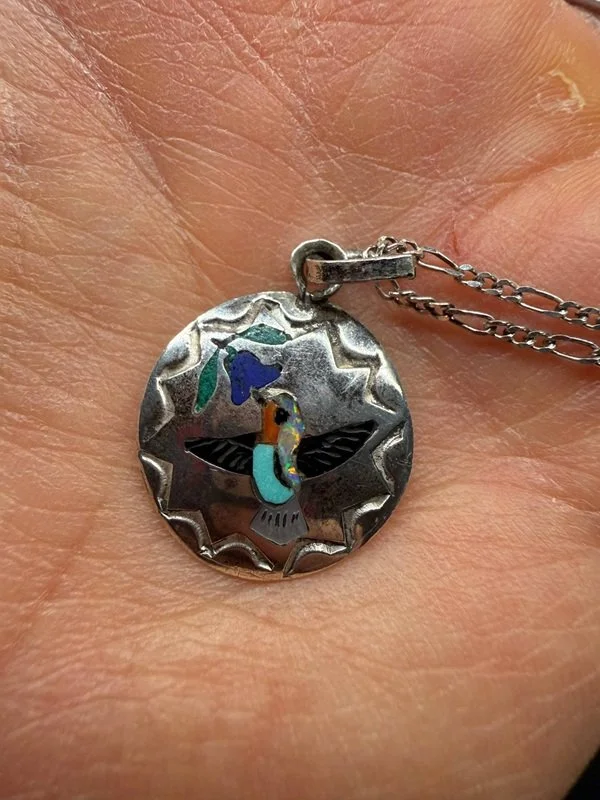
Check out this gorgeous Zuni inlaid hummingbird pendant!

Your to-do list is long.

Your inbox has thousands of unread messages.

Your phone buzzes. A meeting appears on your calendar. Someone needs something. You have three browser tabs open that you were going to handle today.

Somewhere in there, you have work to do. Important work. The kind that moves your career forward.

No wonder focus feels impossible.

Here's the thing: it's not you. When the pressure is on, your brain does exactly what brains do under stress. It scans for threats. It jumps between inputs. It mistakes busyness for progress.

Focus isn't the absence of distraction. It's a skill that you can learn and strengthen.

Over the next six weeks, that's what we're going to do: focus on focus.

You differentiate yourself when you consistently do deep, meaningful work, even when everything around you is loud and chaotic. It builds your reputation. It creates the conditions for opportunity. It delivers for your employer and is fulfilling for you.

You can't control what comes next in your career. But you do own the quality of your work right now.

That's where we start.

This week: Take two minutes and do an attention audit. Be honest. Where does your focus actually go during a typical workday — not where you intend it to go? Jot it down. No judgment. Just notice.

Awareness is always the first step.


You're Not Imagining It. Here's What Helps.

Time to read: 76 seconds

Vintage is more fun that stock photos of random models in an office

The world is a lot right now. You still have a 9am. Let's talk about that.

This week, I want to acknowledge something out loud: it is genuinely hard to care about your inbox when it feels like everything outside is on fire. You are not weak for feeling distracted. You are human. A very tired, caring human.

You've told me you're struggling to focus. That you sit down to work and your brain is somewhere else entirely. That you feel guilty for worrying about a deadline when bigger things are happening. I hear you. I've been there too, as I've written about.

Here's what I want you to know: showing up to your work right now is an act of courage. Not the dramatic kind. The quiet, unglamorous kind — where you make the coffee, open the laptop, and do the thing anyway.

A few ideas for getting through the day:

  • Give yourself five minutes before the noise begins. Close your eyes, put your fingers on the keyboard so everyone thinks you're working, and breathe.
  • Pick one person you get to help today. Start there. The rest will follow.
  • Step away from the headlines for a few hours. The world will need your attention later. Right now, so do the people in front of you.
  • Be embarrassingly patient with yourself and the people around you. Everyone is carrying something you can't see.

You don't have to be unaffected. You just have to be present. And on the days when even that feels like too much, just show up. That counts.

Please email me and tell me how you're really doing. I always want to know. Really and truly.


Lessons I Live By. #3

Time to read: 36 seconds

Happy winter in the US!

Today's lesson: Nothing is urgent.

For years, I behaved as if everything, every day was urgent. Homework! Cooking dinner! Scheduling! Planning! Coaching! I drove myself and my family crazy.

The truth is, I was uncomfortable with uncertainty and lose ends. I operated as if urgency ensured everything would get done. I believed it was possible to force life to be certain if I just tried hard enough.

This lesson took me a long time to learn, and I'm still learning. Nothing is urgent. (OK. A broken arm is urgent. A natural disaster is urgent.) In daily life, very little is urgent. However many things are important. We often sacrifice the truly important under the falsehood of urgency.

Homework is not urgent. Your email is not urgent. Your relationship with your children and employees is important. I found that I confused the two and focused on the wrong things. Take a good look at what is actually important in your life and figure out how to focus on that. Drop the urgency.

Your life and work will get a lot easier!

If you love this newsletter, please share it with your colleagues. They can sign up here.